
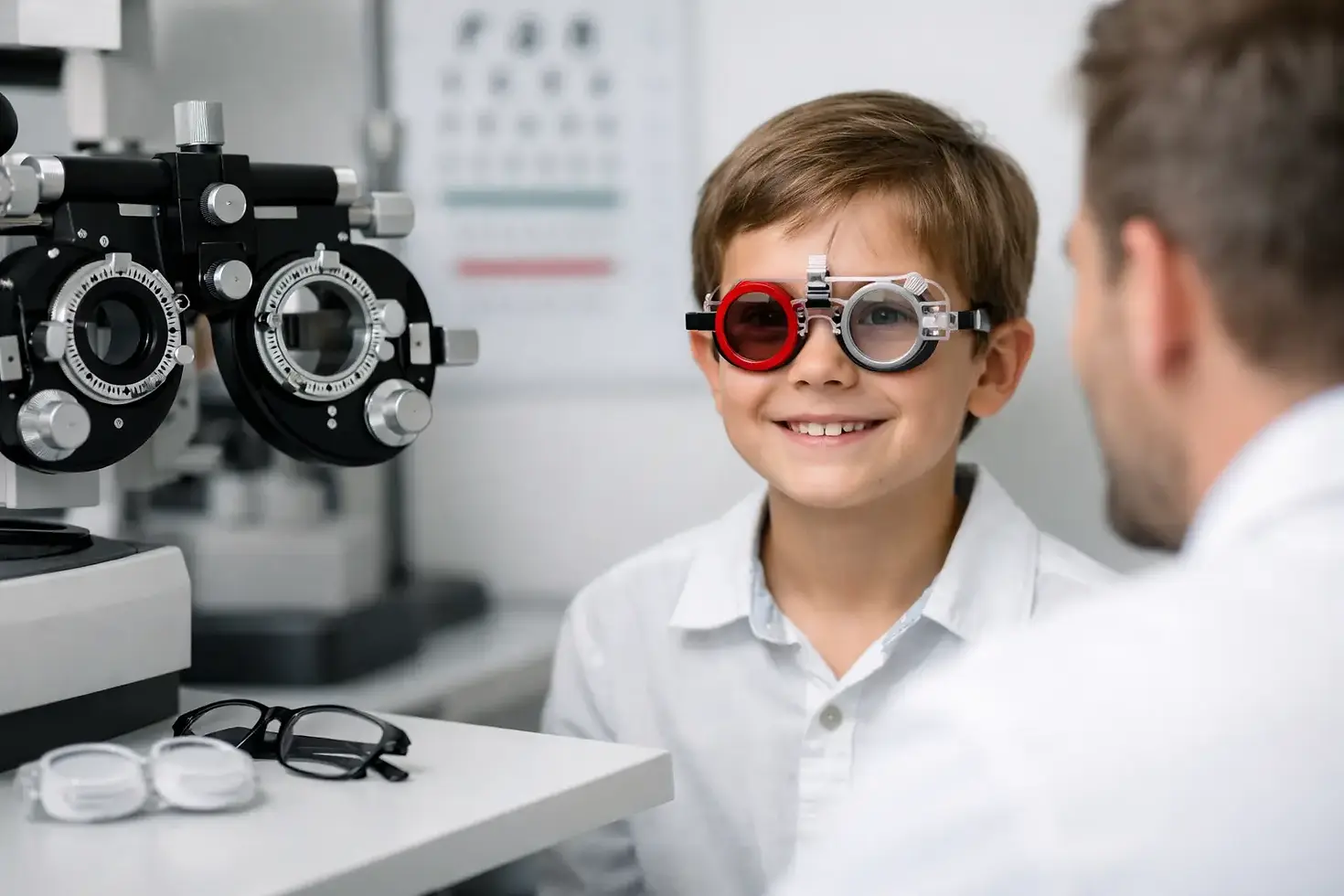
What Strabismus Lens Outcomes Can Improve

A pair of glasses can look perfectly ordinary and still make the workday feel completely different. For someone living with strabismus, the meaningful strabismus lens outcomes are rarely about a dramatic moment of perfect vision. More often, they show up in quieter wins: finishing a report with less exhaustion, reading without losing your place, feeling more settled while walking through a busy mall, or being able to look at a screen without bracing for discomfort.
That difference matters. When the eyes do not work together comfortably, visual effort can spill into concentration, posture, confidence, and energy. Thoughtfully customized spectacles may help reduce that burden, but the best results come from realistic expectations, careful lens design, and a frame fit that respects how a person actually moves through daily life.
Strabismus Lens Outcomes Are About Function
Strabismus is not one experience. Some people notice visual discomfort mainly when reading or using a computer. Others struggle more in large, visually busy spaces, under fatigue, or when switching between near and far tasks. Symptoms may be constant, intermittent, or so familiar that a person only realizes how much effort they have been using after their glasses are improved.
For that reason, a good lens outcome is personal. One wearer may value being able to work through a long spreadsheet with fewer breaks. Another may want greater comfort while shopping, commuting, or spending time with family. A child’s outcome may be better engagement with books, schoolwork, and play. The lens is not judged only by what is visible on an eye chart. It is judged by whether life feels easier to see.
Spectacles can support clearer, more comfortable vision in appropriate cases, but they do not automatically change the underlying cause of eye misalignment. Some people need ongoing care from an eye-care or medical professional alongside their spectacles. The role of a specialist optician is to translate the visual needs identified for the wearer into lenses and a frame setup that can perform reliably in real life.
Comfort can be a significant result
Visual comfort is easy to dismiss because it is difficult to measure in a single moment. Yet it is often the outcome people value most. A person may not have realized that their afternoon headaches, sore eyes, or urge to remove their glasses were connected to sustained visual effort until a better lens solution reduces those patterns.
Comfort does not necessarily mean every symptom disappears. It can mean the discomfort arrives less often, builds more slowly, or is easier to recover from after demanding tasks. For office workers, that can translate into more productive screen time. For people who read extensively, it may mean less frequent loss of concentration. These are practical gains, not small ones.
Reading and screen use may feel more stable
Near work places high demands on the visual system. Text is dense, screens are bright, and modern work often requires constant shifts among a monitor, keyboard, phone, and printed documents. When lens design does not suit the wearer, these transitions can feel tiring even when the words themselves look clear.
A well-considered spectacle solution can make near tasks feel more stable and less effortful. This is especially relevant for people who have previously been told that their glasses are technically correct but still feel wrong. Lens performance involves more than basic sharpness. It also involves the relationship between the lens design, the wearer’s visual needs, their working distance, and the way the frame sits throughout the day.
Why Results Vary From One Wearer to Another
Two people with similar-looking prescriptions can have very different experiences in the same lens. Their daily routines, visual history, sensitivity to distortion, and tolerance for change may be completely different. This is why a retail-style approach of choosing a lens from a menu can disappoint people with more complex visual discomfort.
Lens outcomes depend on the complete system: the lens design, lens material, frame shape, frame adjustment, how consistently the glasses sit in their intended position, and the tasks the wearer needs to do. A frame that slides down, sits unevenly, or is too large for the usable lens area can interfere with otherwise excellent lens work.
Progressive lenses deserve particular care. They can be a valuable option for people who need vision support at several distances, but they also involve compromises. The areas designed for different viewing distances are arranged within the lens, and some wearers are more sensitive than others to peripheral blur or changes in spatial comfort. A design that works beautifully for a mostly desk-based wearer may not be the best match for someone who walks between meetings, drives frequently, or needs wide, comfortable intermediate vision.
There is also an adjustment period to consider. When a new lens changes the way a person experiences space, text, or movement, the brain may need time to settle into that new visual information. Mild unfamiliarity in the first days can be normal. However, persistent discomfort, increased strain, or a sense that the glasses are making daily tasks harder deserves prompt attention rather than silent endurance. Fine adjustments can matter greatly.
What Realistic Progress Looks Like
The most useful way to think about strabismus lens outcomes is as a pattern over days and weeks, not a pass-or-fail test in the optical store. The question is not simply, “Can I see clearly right now?” It is, “How do these glasses behave during the tasks that usually challenge me?”
Helpful signs can include being able to read longer before feeling tired, less visual stress during screen work, improved confidence in routine movement, fewer moments of blur or image instability, and less need to tilt the head or take frequent visual breaks. Some people also notice that they feel less drained at the end of a visually demanding day.
It helps to pay attention to context. Are the glasses comfortable at a desk but difficult outdoors? Do they work well in the morning but become challenging late in the day? Is a specific task, such as using a laptop or reading subtitles, still troublesome? These details make follow-up conversations far more useful because they describe performance, not just preference.
For families, observations from home and school can be particularly valuable. Changes in reading stamina, avoidance of close work, complaints of tired eyes, or differences in confidence can all provide a fuller picture of whether the spectacle solution is supporting the child’s day.
The Value of a Personalized Optical Relationship
People with complex visual needs are often frustrated because they have been advised to “just get used to” glasses that make them feel unwell. Sometimes adaptation is appropriate. Sometimes the lens design, fitting, or frame choice needs more attention. Knowing the difference requires listening carefully to the wearer’s experience.
At Eye Zen Optical, that listening is part of the craft. The goal is not to sell the most complicated lens or the most fashionable frame. It is to make glasses that suit the person wearing them: their routine, their concerns, their comfort, and the visual tasks that shape their day.
That personal approach also makes room for honest trade-offs. A lens optimized for long computer sessions may not be the ideal all-purpose option for every activity. A larger frame may offer a certain look but may not provide the most comfortable usable viewing areas for every wearer. The right choice is the one that supports the priorities that matter most, with clear guidance about what to expect.
If visual symptoms are new, suddenly worse, or accompanied by other concerning changes, spectacles should not be treated as a substitute for timely professional medical care. But when the need is a better-performing pair of glasses within an appropriate care plan, careful customization can make a meaningful difference.
The best outcome is often simple: glasses that stop demanding so much attention. When vision feels more settled, you can give more of your energy to work, conversation, family, and the small moments that make a day feel like your own.


Comments