
Eye Zen
眼静
Phoria & Binocular Vision Problems Singapore | Eye Zen Optical
Understanding Phoria and Binocular Vision Problems
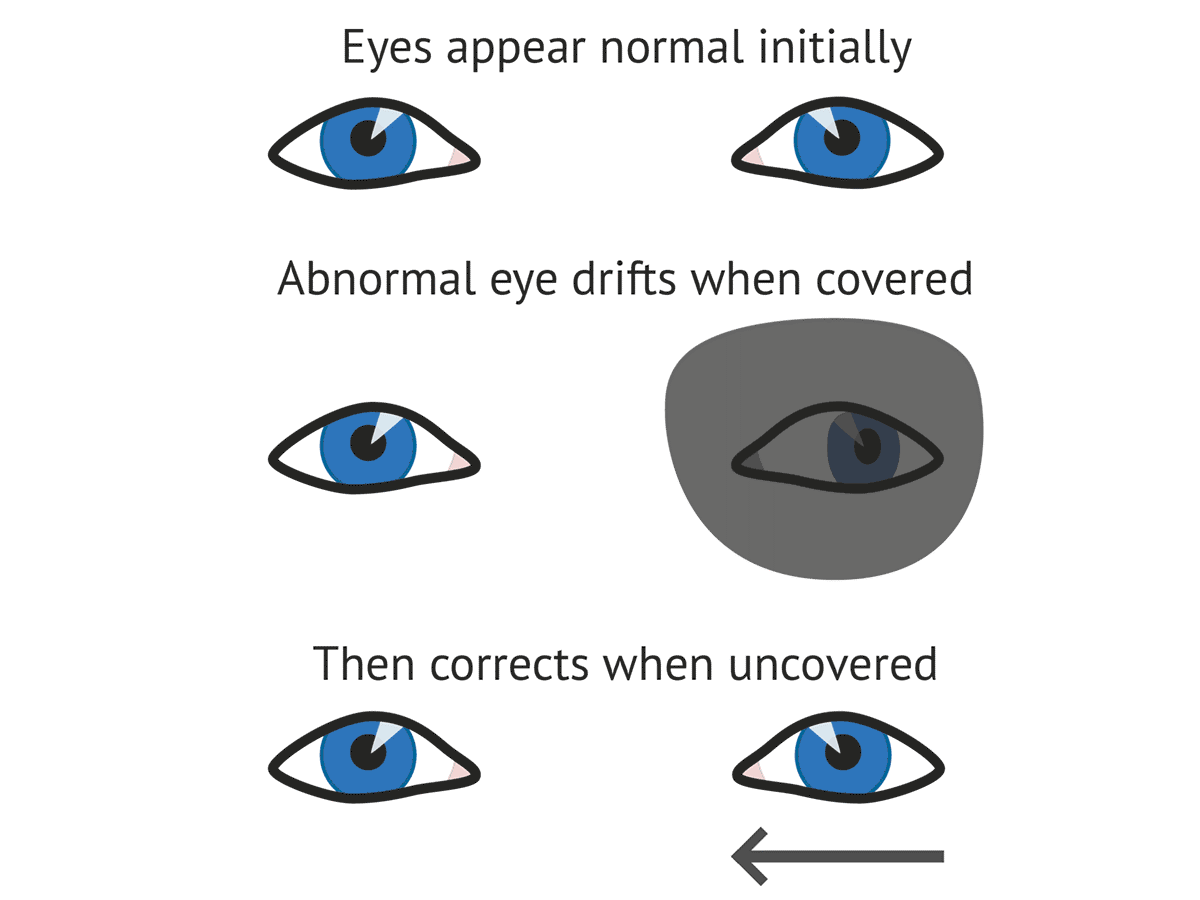
Phoria is a type of latent eye misalignment that occurs when the two eyes are not being fully held in alignment by the visual system.
Unlike a manifest eye turn, the eyes may appear normally aligned when both eyes are working together. The misalignment may become more apparent when binocular vision is disrupted, such as when one eye is covered.
Phoria can occur in different forms, including exophoria, esophoria, hyperphoria and hypophoria, depending on the direction of the eye's tendency to deviate.
What symptoms can Phoria be associated with?
Some people with phoria may have no noticeable symptoms. Others may experience visual discomfort, particularly during prolonged or demanding visual tasks.
Depending on the individual and the type of binocular vision problem, symptoms may include:
-
Eye strain or visual fatigue
-
Headaches associated with visual tasks
-
Difficulty maintaining comfortable single vision
-
Intermittent or temporary double vision
-
Blurred or fluctuating vision
-
Difficulty with prolonged near work
-
Feeling more comfortable closing one eye
-
Reduced or uncomfortable depth perception
-
Motion or visual discomfort
These symptoms can have many possible causes, so they should not automatically be attributed to phoria alone.
Phoria and Binocular Vision
Our two eyes normally work together as a coordinated visual system. This is known as binocular vision.
When the visual system has difficulty maintaining comfortable alignment between the two eyes, some people may experience symptoms during reading, computer work, driving or other visually demanding activities.
Phoria is one of the factors that may be considered when investigating binocular vision-related discomfort.
It is also important to distinguish phoria from tropia or strabismus, where an eye is visibly misaligned under certain conditions.
Can Phoria cause double vision?
Phoria does not necessarily cause symptoms in everyone.
However, when the visual system has difficulty compensating for an eye's tendency to deviate, some individuals may experience intermittent double vision or difficulty maintaining single vision.
If you are experiencing persistent or unexplained double vision, it is important to seek an appropriate eye-care assessment because double vision can have a number of different causes.
How is Phoria assessed?
A professional assessment may consider several aspects of vision and eye alignment, depending on the individual's symptoms and visual requirements.
This may include:
-
Your visual history and symptoms
-
Your current spectacle prescription
-
How the two eyes work together
-
Eye alignment under different viewing conditions
-
Near and distance visual requirements
-
Previous spectacle or lens experiences
-
Other factors that may contribute to visual discomfort
The purpose is to understand the visual problem rather than simply correcting the spectacle prescription.
Can spectacles help with Phoria-related visual discomfort?
The appropriate optical solution depends on the individual's visual findings, symptoms and requirements.
For some customers, carefully considered spectacle correction may form part of an overall approach to improving visual comfort or maintaining comfortable single vision.
This may involve more than simply changing the prescription. Lens design, fitting, optical balance and the way the spectacles are used can all be relevant.
Eye Zen Optical focuses on personalised spectacle solutions for customers experiencing complex or difficult-to-correct visual problems.
How Eye Zen Optical can help
At Eye Zen Optical, we take the time to understand what you are experiencing rather than treating every visual complaint as a standard prescription problem.
If you are experiencing visual discomfort that may be associated with binocular vision, phoria, double vision or difficulty adapting to spectacles, we can discuss your symptoms and determine whether an optical assessment is appropriate.
Our approach is focused on understanding your individual visual needs and finding an appropriate spectacle solution where possible.
Allen — Founder & Optician at Eye Zen Optical
Allen has worked in opticianry since 2005 and founded Eye Zen Optical in Singapore in 2022. His work focuses on personalised spectacle solutions, including complex spectacle requirements, prism-related prescriptions and progressive-lens difficulties.
Learn more about Allen →
Frequently Asked Questions
Is phoria the same as strabismus?
No. Phoria is generally a latent tendency for the eyes to deviate that may be controlled while both eyes are working together. Strabismus, or tropia, involves a manifest eye misalignment.
Can phoria cause headaches?
Some people with symptomatic binocular vision problems may experience headaches or visual fatigue, particularly during prolonged visual tasks. However, headaches can have many causes and should not automatically be attributed to phoria.
Can phoria cause double vision?
It can be associated with intermittent difficulty maintaining single vision in some individuals. Persistent double vision should be professionally assessed because it can have many possible causes.
Why do I feel more comfortable closing one eye?
Some people with binocular vision difficulties may find that covering one eye reduces the visual demand of maintaining single vision. If this happens frequently, an eye-care professional can assess the underlying visual problem.
Can glasses correct phoria?
The appropriate optical solution depends on the individual's visual assessment and symptoms. In some cases, spectacle correction may help with visual comfort, but there is no single spectacle solution that is appropriate for everyone with phoria.
Should I see an optician for phoria?
For spectacle-related visual discomfort and personalised optical solutions, Eye Zen Optical can discuss your visual requirements and advise whether an optical assessment is appropriate.
Looking for help with visual discomfort?
If you experience double vision, difficulty maintaining comfortable single vision, visual fatigue, headaches during visual tasks or discomfort with your current spectacles, contact Eye Zen Optical to discuss your situation.