
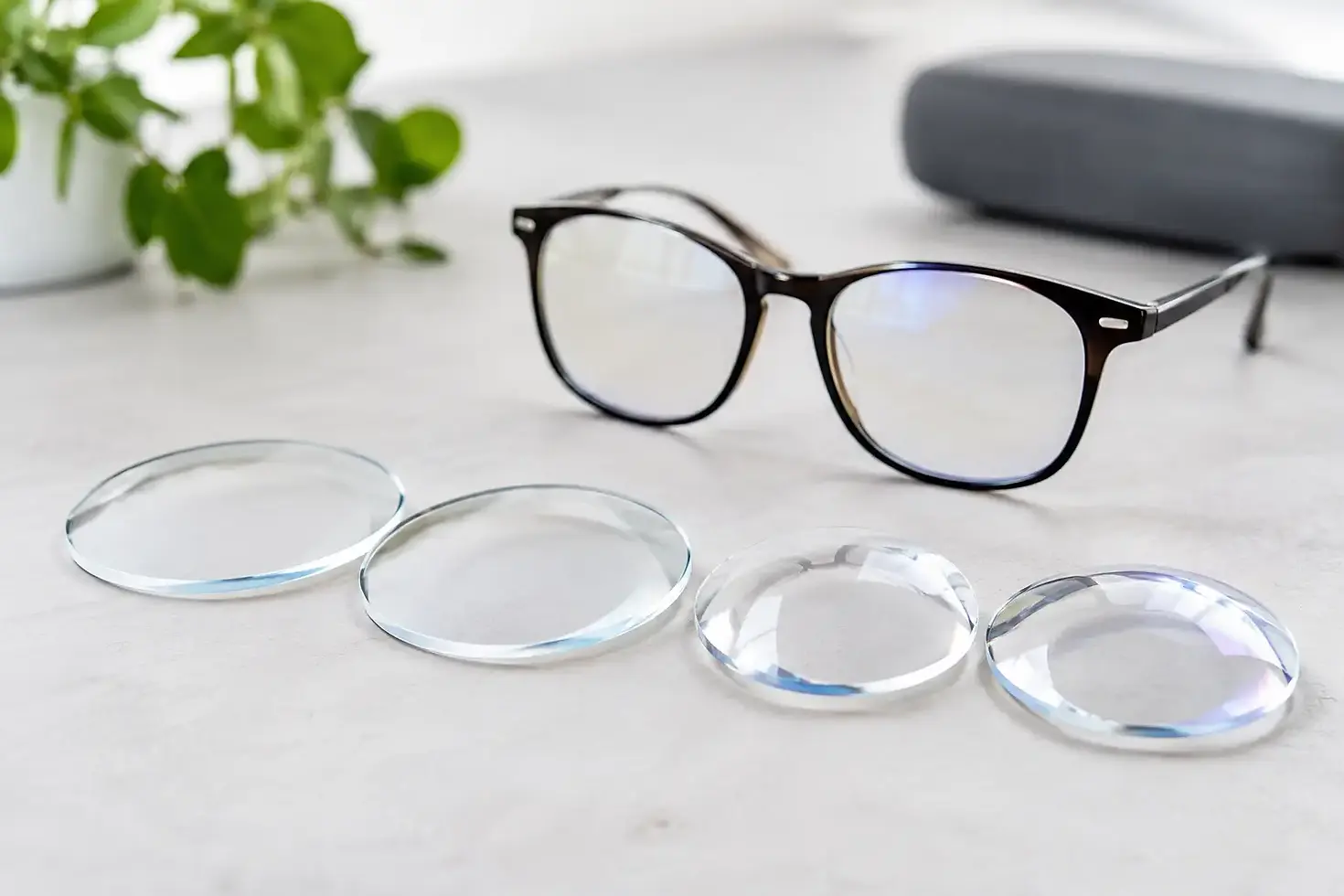
Freeform Lenses Compared With Standard Lenses

A pair of glasses can look perfectly ordinary yet feel wrong from the first morning meeting to the last train home. Words seem to move on a screen, stairs feel less certain, or a progressive lens only feels clear when you hold your head in one exact position. When freeform lenses are compared with standard lenses, the meaningful question is not which sounds more advanced. It is which design gives your eyes the most comfortable, dependable support for the way you actually live.
For many people, a standard lens is an excellent and sensible choice. For others, particularly those managing visual discomfort, uneven prescriptions, demanding screen work or difficulty with progressive lenses, the added personalisation of freeform design can make a noticeable difference. The detail lies in understanding what each lens is designed to do.
Freeform lenses compared with standard lenses: the essential difference
Standard lenses are made using established lens curves and design parameters. They may be supplied from a range of pre-designed options, then finished to suit the prescription and frame. This approach has served spectacle wearers well for many years and remains appropriate for straightforward prescriptions, uncomplicated visual needs and well-chosen frames.
Freeform lenses use highly precise digital surfacing to create the lens surface in finer, more individualised detail. Rather than relying only on a more general design, the lens can be optimised around the wearer’s prescription, selected frame and intended visual tasks. In progressive lenses, this can mean a design that gives more considered priority to distance, intermediate or near viewing, depending on the wearer’s daily routine.
It is helpful to avoid thinking of this as a simple upgrade from basic to premium. A freeform lens is not automatically the right answer because it is digitally made, and a standard lens is not inferior because it uses a more conventional design. Lens performance depends on the whole picture: prescription, frame fit, lens type, working distances, visual history and the wearer’s tolerance for peripheral blur or movement.
Where freeform design can make a practical difference
The clearest benefit of freeform technology is control. Lens designers can manage how power is distributed across the surface with greater precision. This matters most when small compromises become large daily frustrations.
Wider useful vision in progressive lenses
Every progressive lens involves zones for distance, intermediate and near vision. There are also unavoidable areas of softer, less stable vision at the sides. A well-designed freeform progressive lens can position and manage these zones more carefully for the wearer’s needs, often creating a more usable area for the tasks they perform most.
For someone who regularly moves between a laptop, colleagues across a meeting room and a phone, this can feel less restrictive than a generic all-purpose design. For a reader who spends hours with documents, a near-priority design may be more appropriate. The goal is not to eliminate all peripheral distortion, because optics has real limits, but to make the available vision work more naturally.
Freeform design can also be valuable for people who have had difficulty adapting to progressive lenses before. That does not mean every unsuccessful experience is solved by changing to a digital lens. Frame position, lens selection, daily habits and the balance between the two eyes may all play a part. Still, a more individualised design gives an experienced optician more scope to reduce unnecessary compromise.
Better control in stronger or unequal prescriptions
Higher prescriptions and noticeable differences between the two eyes can place greater demands on lens design. Wearers may be more aware of edge blur, image size differences, swim-like movement or a sense that the floor is not quite where it should be. A carefully selected freeform lens may improve how comfortably vision is presented across the lens, especially in a frame that suits the prescription.
This is not a promise that one lens design will remove every symptom. Some visual concerns require careful professional management beyond the spectacle lens itself. But where spectacles are part of the solution, precision in design and fitting is worth taking seriously.
Screen work and close-range demands
Office workers often assume their discomfort comes from screen time alone. Screens can certainly be tiring, but the problem is frequently more specific: the screen may sit in an awkward part of a progressive lens, the intermediate area may be too limited, or a general-purpose design may not match the distances used at work.
Freeform occupational lenses are often designed around nearer and intermediate viewing. They can offer a broader, more relaxed workspace than a conventional progressive intended for all-day distance vision. The trade-off is that they are not usually the pair to wear for driving or walking outdoors. For some people, a dedicated work pair is more comfortable than expecting one pair to perform every task equally well.
The fitting matters as much as the lens technology
A beautifully engineered lens can still disappoint in an unsuitable frame or a poor fit. The angle of the frame, how close it sits to the face, its height and the way it rests during normal wear all influence how the wearer experiences the lens. This is particularly true with progressive and freeform designs, where the intended viewing zones need to sit naturally within the wearer’s line of sight.
Frame choice is therefore not merely cosmetic. A very shallow frame may limit the available reading area in a progressive lens. A frame that slips down during the day can change where a wearer looks through the lens. Very large frames can create their own considerations, particularly with stronger prescriptions. The most flattering frame is not always the most comfortable optical choice, but there is usually a thoughtful middle ground.
At Eye Zen Optical, the conversation begins with the person rather than a display wall of lens packages. How long do you spend at a computer? Do you read in bed? Are you confident on steps and escalators? Have previous progressive lenses caused strain, imbalance or a narrow field of view? These everyday details help determine whether a standard design is sufficient or a more tailored freeform lens is likely to earn its cost.
When a standard lens may be the better choice
Standard lenses should not be dismissed. They can provide clear, comfortable vision at a lower cost when the prescription is straightforward and the wearer’s needs are uncomplicated. A single-vision distance pair for occasional use, for example, may gain little from the extra sophistication of a bespoke freeform design.
They may also be the sensible option when a wearer wants a spare pair, needs a practical solution within a firm budget, or has previously been happy with a conventional design. Good optics is not about adding technology for its own sake. It is about choosing the level of design that provides a genuine benefit.
The same principle applies to lens coatings, materials and thinning options. These choices can affect durability, appearance and comfort, but they do not turn an unsuitable design into the right one. It is better to invest in the parts of the spectacle that address a real daily need.
Questions worth asking before choosing
A useful lens recommendation should be easy to explain in real-life terms. Ask what visual task the lens is prioritising, whether it is intended as an all-day pair or a work-specific pair, and what compromises you should reasonably expect. If you have struggled with previous glasses, describe the exact situation rather than saying they were simply uncomfortable. Was the issue reading, walking, driving at night, computer work, eye fatigue or a feeling of imbalance?
For people with double vision, strabismus, stereoblindness, visual dyslexia, colour deficiency or other persistent visual concerns, a standard retail conversation may not go far enough. These experiences deserve patient listening and a spectacle solution that respects the complexity of day-to-day vision. Glasses do not need to be fashionable objects first and functional tools second. They can be both, but function must lead.
The best lens is the one you stop noticing because it lets you get on with your day. Whether that is a carefully chosen standard lens or a tailored freeform design, you deserve glasses that feel considered, comfortable and made for your life.


Comments