
Choosing Lenses After Cataract Surgery for Comfort

The day-to-day question after cataract surgery is often not, “Can I see?” but “Why does this still not feel quite right?” Reading a message, recognizing faces, walking downstairs, and returning to screen work all place different demands on the eyes. Choosing lenses after cataract surgery is therefore not simply a matter of selecting a frame or accepting the first pair of reading glasses offered. It is a decision about how you want to use your vision.
Choosing Lenses After Cataract Surgery Starts With Timing
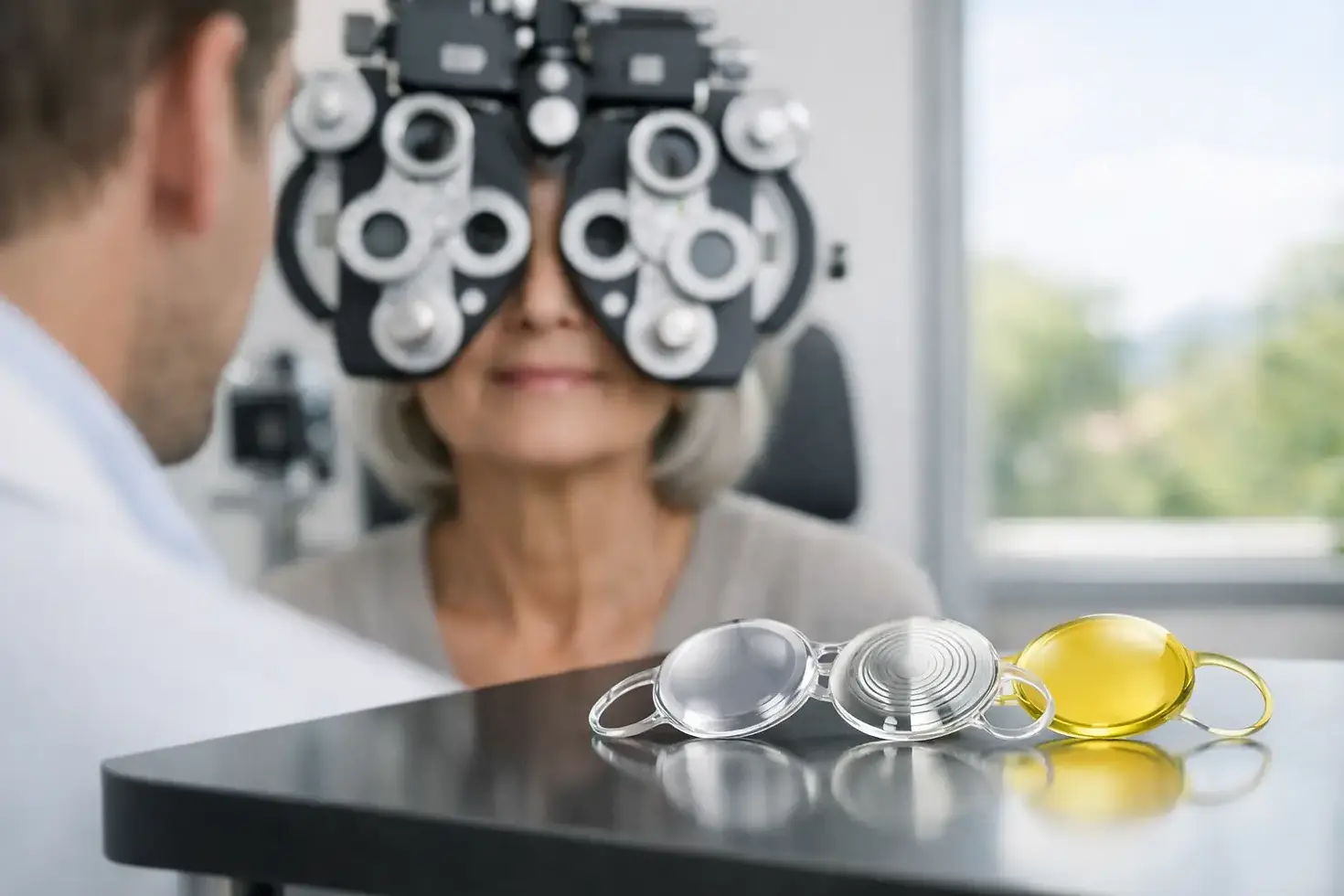
Cataract surgery replaces the eye’s cloudy natural lens with an artificial intraocular lens. That implanted lens is selected as part of your surgical plan. The glasses you may need afterward are a separate decision, made once your eyes have had adequate time to recover and your vision has settled.
For many people, a final glasses prescription is considered several weeks after surgery, often around four to six weeks, although the right timing varies. If only one eye has been treated, the difference between the two eyes can feel especially noticeable while you wait for the second procedure or for vision to stabilize. Temporary glasses, an adjustment to an existing pair, or simply a little patience may be the sensible choice during this period.
There is no prize for rushing into expensive lenses before your visual needs are clear. A good pair of spectacles should support the result of surgery, not become another source of blur, imbalance, or fatigue.
Separate the Implant Decision From the Glasses Decision
It helps to understand the two kinds of “lenses” involved. Your surgeon discusses the implanted intraocular lens before surgery. Depending on the plan, it may be designed mainly for distance vision, near vision, or a broader range of focus. Every option has trade-offs. For example, a wider range of unaided vision can be appealing, but some people may still prefer glasses for detailed reading, prolonged computer work, driving, or the sharpest possible distance clarity.
After surgery, spectacle lenses refine how your vision works in real life. Even people who are delighted with their surgical result may benefit from prescription glasses. Small remaining focusing differences, astigmatism, dry-eye-related fluctuations, or the demands of a particular task can all make a thoughtfully made pair worthwhile.
This is reassuring rather than disappointing. Cataract surgery can clear the view; well-chosen spectacles can make that clear view more comfortable, consistent, and useful across your day.
Let Your Daily Distances Lead the Choice
The best lens design depends less on what sounds advanced and more on where your eyes spend their time. Someone who drives frequently may prioritize crisp distance vision and reduced glare. Someone who reads extensively may want a dedicated near pair with a generous, comfortable reading area. A person working across two monitors all day has a different visual pattern again.
Single-vision lenses for one clear purpose
Single-vision lenses focus on one range, such as distance, computer distance, or reading. They are often an excellent choice after cataract surgery because they are straightforward and provide a wide, stable field of view for the intended task.
A dedicated distance pair can be useful for driving, television, social activities, and walking outdoors. A dedicated reading pair can feel wonderfully easy for books, labels, crafts, and close work. The trade-off is changing glasses when your task changes. For some people, that is a minor inconvenience. For others, it interrupts the rhythm of the day.
Progressive lenses for multiple distances
Progressive lenses provide distance, intermediate, and near vision in one pair, without a visible line. They can be a practical option for people who move constantly between conversations, screens, documents, and the room around them.
But a progressive lens is never one-size-fits-all. The usable areas for each distance, the amount of peripheral distortion, the lens design, frame shape, and the position of the lenses on the face all influence comfort. A person returning to progressives after surgery may need time to adapt, particularly if their previous visual habits changed significantly after the cataracts were removed.
For some wearers, a premium progressive lens offers more natural movement through the day. For others, especially those who spend long hours at a fixed workstation, an occupational or computer-specific lens may feel more relaxed than trying to make one progressive pair do everything.
Computer lenses for focused work
A standard progressive lens can be convenient, but its intermediate zone may feel limited when you work across multiple screens or look repeatedly from monitor to keyboard and colleague. Computer lenses are designed around those nearer working distances. They are not usually the best choice for driving, but they can make office work, home administration, and video calls noticeably more comfortable.
If screens leave you lifting your chin, leaning forward, or feeling tired despite clear vision, the issue may be the lens design rather than the strength of the prescription alone.
Lens Material and Coatings Matter More Than They Seem
After cataract surgery, many people become more aware of light, reflections, and contrast. The right lens material and coatings can help make vision feel calmer without making exaggerated promises.
Anti-reflective coating is often valuable for reducing distracting reflections from screens, indoor lighting, and headlights. It also improves the appearance of the lenses by allowing others to see your eyes more clearly. For outdoor wear, prescription sunglasses or lenses with dependable UV protection can improve comfort in bright Singapore light. A polarized sunglass lens may be particularly helpful around roads, water, or other highly reflective surfaces, though it may not suit every dashboard or digital display.
Thinner, lighter lens materials can improve appearance and comfort when a prescription calls for them. Yet thin is not automatically best. The frame, the way it sits on your nose, lens durability, edge thickness, and your preferred look all deserve consideration. The goal is a pair that feels balanced enough to wear, not a specification sheet with the most upgrades.
Precise Fitting Is Part of the Lens Choice
A beautifully designed lens can still disappoint when it is not fitted thoughtfully. This matters with every pair, but it becomes especially noticeable with progressives, stronger prescriptions, and post-surgery vision that feels different from what you were used to before.
Frame choice affects lens performance. A frame that slides down, sits unevenly, or is too deep or too narrow for the chosen design can turn a promising lens into a frustrating one. The tilt of the frame, its distance from the eyes, and the way it rests during your normal posture all influence where you naturally look through the lens.
This is why a consultation should include a real conversation about your habits. Do you read in bed? Work from a laptop and a second monitor? Drive at night? Feel uncomfortable in supermarket aisles? Prefer to look straight ahead when walking? These are not minor lifestyle details. They guide the lens design and fitting decisions that affect comfort every day.
For people who have lived with visual imbalance, strabismus, or previous difficulty adapting to progressive lenses, careful customization is particularly valuable. Surgery may improve clarity, but it does not automatically erase every visual comfort issue that existed beforehand.
When the New View Does Not Feel Right
Give yourself permission to say something when a new pair feels wrong. Clear letters on a chart do not always guarantee comfortable vision during a full day of movement and work. Headaches, strain, a feeling that the floor is tilted, awkward head posture, or difficulty finding a clear area in a progressive lens deserve attention.
Sometimes the solution is a small frame adjustment or a short adaptation period. Sometimes the better answer is a different lens design for a different task. And sometimes symptoms after surgery should be discussed promptly with your surgical eye-care team rather than treated as a glasses issue. Sudden loss of vision, increasing pain, marked redness, flashes, or a sudden shower of new floaters require prompt medical attention.
Bring your current glasses to your appointment, along with an honest picture of what is and is not working. Mention the tasks that matter most and the moments when you feel least confident. That gives your optician a far better starting point than asking for “the best lens.”
At Eye Zen Optical, the aim is not to sell a complicated lens because it has the longest list of features. It is to make a pair of glasses that helps your eyes feel settled while you live your actual life. After cataract surgery, that may mean one versatile pair, two purpose-built pairs, or a simple solution that makes your reading, screens, and daily movement feel easy again.


Comments